▼ Il tweet del giorno

Visualizzazione post con etichetta fabio. Mostra tutti i post

martedì 8 novembre 2011

Intervistato.com | Fabio Lalli @fabiolalli


Durante quest'intervista con Fabio Lalli, il fondatore del network Indigeni Digitali, abbiamo parlato di enterprise 2.0, startup, social media e social network e il loro utilizzo in ambito aziendale, ma anche di Followgram, la startup più conosciuta di Fabio.


Qualche giorno fa abbiamo avuto il piacere di intervistare Fabio Lalli, fondatore del network Indigeni Digitali e "startupper compulsivo".

Il network degli Indigeni Digitali è nato un anno e mezzo fa da un'idea che Fabio ha portato spesso nelle aziende in cui ha lavorato: aperitivi periodici informali, un'occasione per fare knowledge sharing tra persone che lavorano in divisioni diverse di una stessa azienda.
In seguito l'aperitivo è stato esteso alla rete, ed è diventato effettivamente "Indigeni Digitali", crescendo e diffondendosi poi rapidamente sia a Roma, sia nel resto d'Italia.
Ognuna delle penne del simbolo degli Indigeni Digitali ha un significato, rappresentano i valori degli Indigeni e sono, fondamentalmente, il riassunto dell'Etica Hacker di Pekka Himanem. [video]

Nel network non ci sono solamente programmatori e tecnici ma anche persone che lavorano in comunicazione, manager, persone che già hanno fatto impresa: queste competenze ibride hanno portato in molti casi a progetti nuovi, startup o addirittura nuove opportunità di lavoro.
Gli obiettivi futuri sono da una parte far crescere il network, che ha già cominciato ad attirare l'interesse di alcuni investitori, dall'altra mantenere l'aspetto che secondo Fabio è il più importante, ovvero l'approccio disinteressato e utile a tutti: si tratta infatti di una rete di persone che si aiutano senza interessi o influenze di brand. Gli sponsor partecipano attivamente e fanno crescere il network, ma non modificano i valori e il modello del network stesso. [video]

Infine Fabio ha sottolineato l'importanza della collaborazione con le università: gli Indigeni Digitali possono rappresentare una grande opportunità di trasferimento di esperienza da manager e imprenditori a persone che stanno solo adesso uscendo dalle università, per portare poi anche alla nascita di nuovi progetti. [video]

Fabio ha parlato anche di Followgram, un'applicazione nata dalla collaborazione con Lorenzo Sfienti che permette agli utenti di ampliare le funzionalità di Instagram. L'app è diventata popolare in brevissimo tempo ed è stata ripresa dalla CNN e da The Next Web, ed attualmente viene usata anche da brand piuttosto importanti come AirFrance, British Airways, Audi e Converse.
I numeri di Followgram sono molto promettenti: In 2 mesi di vita sono stati generati 8600 vanity url, l'app conta circa 150 - 160 iscrizioni, 17.000 utenti unici e 50.000 pagine visitate al giorno.
Il successo che ha riscosso ha quindi portato a ipotizzare un modello pro da poter monetizzare. [video]

Per quanto riguarda l'aspetto economico per quello riguarda le startup, Fabio sostiene che la maggior parte dei progetti dovrebbero essere autosostenibili, e adottare un modello che permetta di andare online in modo strutturato, senza aver bisogno di soldi ancor prima di partire.
Questo, secondo Fabio, rappresenta un buon esercizio per capire in che modo si possono ottimizzare i costi, e per non dover in seguito crescere in pareggio tra revenue e costi. [video]

Abbiamo parlato con Fabio anche di enterprise 2.0, sistemi più evoluti rispetto alle Intranet classiche: a suo avviso il pregiudizio più grande che le aziende hanno nei confronti di approcci di questo tipo è la paura della perdita del controllo.
La sua esperienza in aziende che hanno adottato questi sistemi però è stata molto positiva. Gli utenti venivano molto responsabilizzati nel momento in cui dovevano portare il loro contributo all'interno della piattaforma aziendale, e i vantaggi erano palesi: innanzitutto la disponibilità di informazioni, dall'altra il coinvolgimento che portava a rafforzare il senso di appartenenza all'azienda e ad aumentare vicinanza tra dipendente e azienda. [video]

Abbiamo proseguito parlando di sistemi di geolocalizzazione, crowdsourcing, i vantaggi e gli svantaggi di chiudere i social network nelle aziende e molto altro.

Invito tutti quindi a visionare l'intervista integrale, molto più ricca di riflessioni e dettagli rispetto a questa mia breve sintesi.

Buona visione!

Maria Petrescu

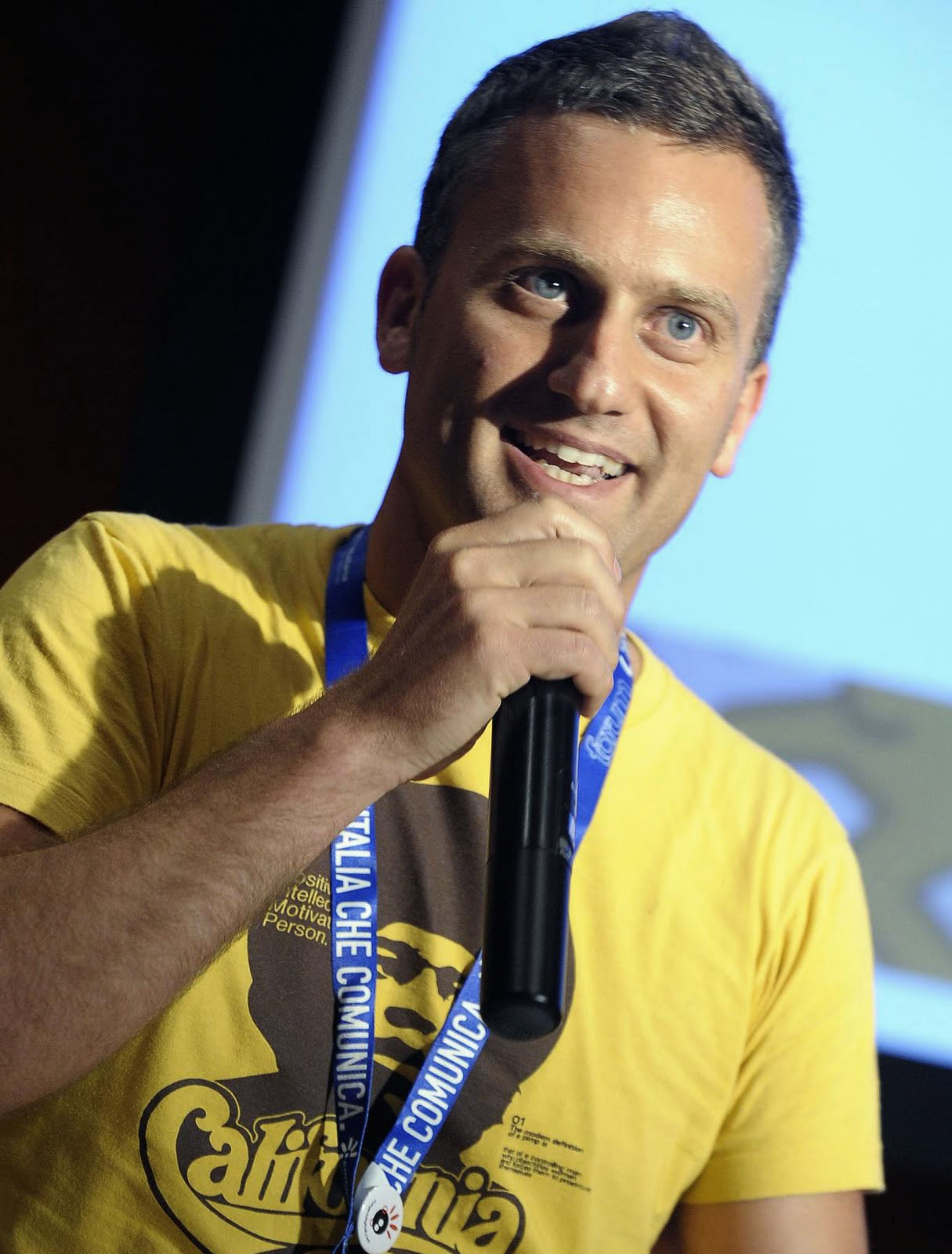
Photo credit: Stefano Passiglia


Intervistato.com | Fabio Lalli

A few days ago we had the pleasure of interviewing Fabio Lalli, founder of the Indigeni Digitali network and compulsive startupper.

The Indigeni Digitali network was born one and a half years ago from an idea that Fabio has often brought in the companies he has worked in: periodical informal drinks, a chance to do knowledge sharing among people working in different divisions inside the same company.
Afterwards the drink soiree was extended to the web, and it has become "Indigeni Digitali", growing and spreading rapidly in Rome and in the rest of Italy.
Each of the feathers in the Indigeni Digitali logo has a meaning, they represent the values of the  Indigeni and they basically are a synthesis of Pekka Himanem's Hacker Ethic[video]

Inside the network there aren't just programers and technicians, but also people who work in communication, managers, people who have already done business: these hybrid competences have lead to new projects, startups and even new job opportunities.
The future goals are on the one side make the network bigger, and it has already started to attract the interest of some ivnestors, on the other side maintaining the aspect that Fabio thinks is the most important: the selfless and useful approach. It's a network a people who help each other without brand interests or influences. Sponsors actively participate and make the network grow, but they don't modify the values and the model of the network itself. [video]

Fabio has stressed the importance of the collaboration with universities: Indigeni Digitali can represent a great opportunity for transferring experience from managers and entrepreneurs to people who are just now finishing college, and make new projects to light. [video]

Fabio has also talked about Followgram, an app born from the collaboration with Lorenzo Sfienti which allows users to extend Instagram's basic functions. The app has become extremely popular a very short time and it has been reviewed by CNN and The Next Web, and is also currently used by important brands such as AirFrance, British Airways, Audi and Converse.
Followgram's numbers are very promising: in 2 months 8600 have been generated (update: 16.600) vanity URLs, and the app counts 150 - 160 subscriptions, 17.000 unique users and 50.000 visited pages a day.
The app's success has brought its founders to think about a pro model that could be monetized. [video]

As for the economical aspect of startups, Fabio thinks that most projects should be self-sustainable and adopt a model that allows them to go online in a structured fashion, without needing money before they even start.
This is a good exercise for understanding in what way costs can be optimized, and not be obliged to grow in a constant tie between costs and revenues. [video]

We also talked with Fabio about enterprise 2.0, systems that are more evolved than classic Intranets: in his opinion the biggest prejudice companies have towards these kinds of approaches is the fear of losing control.
His experience inside companies that have adopted these systems is veery positive. Users were very responsibilized when they were bringing their contribution inside the company platform, and the advantages were obvious: firstly of all the availability of information, secondly the engagement that brings to reinforcing the sense of belonging to the company and increasing the closeness between employer and employee. [video]

We continued talking about geolocalization, crowdsourcing, the advantages and disadvantages of closing social networks inside companies and much more.

I invite everyone to view the full interview, much richer in insight and details than my brief synthesis.

Enjoy!

Maria Petrescu

venerdì 16 settembre 2011

Prossimamente: Fabio Lalli @fabiolalli


Fra poche ore avremo il piacere di intervistare Fabio Lalli, esperto di web marketing, social media e sistemi di comunicazione, nonché ideatore e fondatore del network di Indigeni Digitali.

Nato a Roma nel 1977, si è laureato in Comunicazione e Marketing all'Università degli Studi di Modena e Reggio Emilia.

Da oltre 10 anni si occupa di ICT. Ha lavorato per diverse aziende dalla consulenza, alla sicurezza ai system integrator e spaziando su progetti eterogenei: ecommerce, erp, crm, business intelligence, info security management e social media.
Ha acquisito una buona esperienza nell’analisi, progettazione ed ottimizzazione di processi, sistemi, architetture ed applicativi web e mobile. E' appassionato di comunicazione e marketing. Nel tempo libero blogga, twitta, comunica, telefona, programma, naviga, cerca, pensa e innoveggia. Ovviamente fa tutto contemporaneamente. Qualcuno lo definisce startupparo compulsivo.

E' il fondatore del network Indigeni Digitali, un'iniziativa che ha l’obiettivo di generare un punto di incontro e di confronto tra professionisti e tecnici che vogliono interagire collaborare e creare opportunità, sia online che offline.

"L’indigeno digitale è colui che vive il digitale in tutti i suoi aspetti: crea le nuove applicazioni, testa e approfondisce le nuove tecnologie, ricerca continuamente nuove soluzioni tecniche, partecipa attivamente alla conversazione in Rete, sperimenta ed applica nuovi strumenti, aiuta chi manifesta interesse per la tecnologia, mette a disposizione degli altri indigeni il proprio know how, le proprie capacità ed il proprio network."

Insieme a Lorenzo Sfienti ha recentemente lanciato Followgram, una web app sviluppata per estendere le funzioni base di Instagram, già utilizzata da milioni di utenti. Followgram crea un follow button da integrare in siti web e blog e fornisce agli utenti un vanity URL, una galleria di foto e la lista di amici, follower e following.

Fabio è anche l'ideatore di YepLike, Risquare, Baby 2.0 ed Iquii.

Avremo modo di parlare di cultura digitale, startup, il network degli Indigeni, giusto per citare alcuni argomenti.

Naturalmente, se volete proporre una domanda, compilate semplicemente il form qui sotto!

Maria Petrescu


Coming up soon: Fabio Lalli

In just a few hours we'll have the pleasure of interviewing Fabio Lalli, web marketing, social media and communication systems expert, as well as founder and creator of the Indigeni Digitali network.

Born in Rome in 1977, he graduated in Communication and Marketing at the 'Università degli Studi di Modena e Reggio Emilia.

He has been working with ICT for more than 10 years. He has worked for several companies as a consultant, from security to system integrator in several fields: ecommerce, erp, crm, business intelligence, info security management and social media.
He has gained a good experience in analysis, design and optimization of processes, systems, architectures and web/mobile applications. He is passionate about communication and marketing. In his spare time he blogs, tweets, communicates, phones, programs, navigates, searches, thinks and innovates. Obviously all at the same time. Someone has defined him a compulsive startupper.

He is the founder of the Indigeni Digitali network, an initiative that has the goal of generating a point of  encounter and confrontation between pros and technicians that want to interact, collaborate and create opportunities, both online and offline.

"The digital based person is the one that lives digital in every aspect: he creates new applications, tests and masters new technologies, searches for new technical solutions, participates actively in the online conversation, experiments and applies new tools, helps whoever shows interest for technology and shares his know how, capacities and network with other digital based people".

Together with Lorenzo Sfienti he has recently launched Followgram, a web app developed as a way to extend those Instagram's basic functions so appealing to millions of users already.
Followgram creates an Instagram's follow button to be embedded on websites, blogs and so on and provides its users with a vanity URL, his/her photo gallery, friends, followers & following lists.

Fabio is also the founder of YepLike, Risquare, Baby 2.0 and Iquii.

We'll have the chance to talk about digital culture, startups, the Indigeni Digitali network, just to name a few topics.

Of course, if  you want to propose a question, simply fill in the form above!

Maria Petrescu

domenica 14 agosto 2011

Intervistato.com | Fabio Chiusi @fabiochiusi


Con Fabio Chiusi, autore de Il Nichilista, abbiamo parlato di attualità e soprattutto dell'utilizzo dei social media nel giornalismo, partendo dai London Riots e arrivando all'analisi della situazione politica italiana.


Qualche giorno fa abbiamo avuto il piacere di intervistare Fabio Chiusi, giornalista e blogger, autore de Il Nichilista e collaboratore di diverse testate, fra cui il settimanale L'Espresso e il quotidiano online Lettera 43.

Innanzitutto Fabio ci ha spiegato la genesi del suo blog e le motivazioni che l'hanno spinto a cominciare a scrivere ed intraprendere la carriera di giornalista.
Dato che ha conseguito il master all'LSE, non abbiamo potuto non chiedere qualche spiegazione riguardo al modo in cui è vista l'Italia dall'estero, un quadro principalmente improntato sulla mancanza di credibilità del nostro Paese già prima dello scoppio degli scandali sessuali del Presidente del Consiglio. [video]

Uno dei temi che abbiamo trattato da più punti di vista è stato quello dei social media, che per Fabio, come ormai per molti giornalisti, sono la fonte primaria di informazioni, stimoli, notizie, e questo nonostante vi si trovino a volte anche notizie più o meno sbagliate, come nel caso dell'emendamento D'Alia. I recenti eventi che hanno sconvolto l'Inghilterra hanno inoltre portato a un'ulteriore demonizzazione dei social, specialmente Twitter, come testimonia l'intenzione di Cameron di bloccare i social media in quanto mezzo utilizzato dai rivoltosi anche per organizzarsi.
Anthony Giddens, in un'intervista per Repubblica, sosteneva che i social sono fuori dal controllo della polizia, non sottoposti a censura: dato chiaramente non vero, considerate anche le rivelazioni dell'Espresso sugli accordi sottobanco tra Facebook e il Ministero degli Interni italiano, secondo i quali la Polizia Postale avrebbe il diritto di entrare arbitrariamente nei profili degli oltre 15 milioni italiani iscritti a Facebook, senza un mandato della magistratura e senza avvertire l'utente. [video]

Fabio ci ha dato anche la sua visione riguardo alla situazione politica italiana, caratterizzata, a suo avviso, da una crisi di fiducia in cui il primo passo verso una soluzione sarebbero le dimissioni del governo: un esecutivo che non mantiene le promesse e che sembra fuori dalla realtà, estremamente lontano dalle reali necessità degli Italiani.
Si tratta di un problema di credibilità che secondo l'economista Alesina si estende a tutta la classe dirigente internazionale.
Quelle stesse istituzioni che in teoria dovrebbero essere al servizio del cittadino, in realtà generano non risposte, alzando una barriera tra governanti e cittadini che persino i giornalisti fanno fatica a superare. [video]

Abbiamo chiesto a Fabio anche la sua opinione riguardo ai disordini accaduti negli ultimi giorni in Inghilterra, ma data la complessità della situazione socio-economica del paese, è difficile comprendere a fondo le motivazioni e le ragioni di queste proteste.
A suo avviso c'è poco di politico nelle rivolte, che sembrerebbero piuttosto scatenate da una rabbia cieca e incontrollata di una generazione disperata, con il pretesto dell'uccisione di Mark Duggan. Difficile dire, comunque, che si tratti del fallimento della società multietnica come sostiene Fiamma Nirenstein: bisognerebbe conoscere i fatti per averli vissuti personalmente se si volesse avere un'idea chiara in merito. [video]

E' importante la mentalità con cui si scende in piazza, è importante non lasciarsi travolgere dalla mob mentality ed avere consapevolezza del significato che la protesta ha.
Nel caso dei referendum, ad esempio, c'è stata quasi una propaganda sui social media per portare i cittadini a votare i 4 sì: la rete ha avuto, dunque, un'influenza (per quanto difficile da quantificare) nel determinare l'esito delle votazioni, contrariamente a quanto affermato da Mantellini nel suo post Riduci a icona. [video]

Abbiamo inoltre parlato di Wikileaks, e delle conseguenze che la pubblicazione dei documenti ha avuto in Italia rispetto ad altre parti del mondo: sfortunatamente in Italia ci si è interessati del fenomeno soltanto quando ha riguardato l'Italia e in particolare il Presidente del Consiglio, mentre notizie ben più rilevanti non sono riuscite a fare breccia; manca soprattutto la consapevolezza della gravità di una situazione in cui le vite e i destini di due persone - Bradley Manning e Julian Assange - sono in gioco. [video]

Infine Fabio ci ha parlato di Anonymous e dell'idea di aprire un social network in cui sia possibile operare in maniera del tutto anonima al fine di scongiurare il rischio di espulsioni o censure, ma per ora sembra che si tratti di un progetto in fase embrionale. [video]

Non ho potuto non chiedere quale fosse la "dieta mediatica" di Fabio, che legge ogni giorno i quotidiani principali, La Stampa, Il Corriere, Libero, Il Giornale, The Atlantic, Foreign Policy, Piovono Rane, Luca Sofri, Hacker News, Non Leggere questo Blog e Il Post.

Invito tutti, dunque, a guardare quest'intervista straordinariamente ricca.

Buona visione!

Maria Petrescu


Intervistato.com | Fabio Chiusi

A few days ago we had the pleasure of interviewing Fabio Chiusi, journalist, blogger, author of Il Nichilista and colaborator with several newspapers such as L'Espresso and Lettera 43.

First of all Fabio has explained the genesis of his blog and the motivations that have led him to start writing and considering a carreer in journalism.
Since he got his master at LSE, we couldn't not ask him a few explanations about the way Italy is seen from abroad, a picture characterised by the lack of credibility of our country a long time before the Prime Minister's sexual scandals. [video]

One of the topics we have talked about from several points of view was social media, which for Fabio - as for many other journalists - are the main source of information, stimuli, news, even though you can also find incorrect news, as in the case of the D'Alia emendment. The recent events that have shocked England have led to further demonize social media, especially Twitter: Cameron's intention of blocking social media because they are the mean rioters use to organize is a clear indication.
Anthony Giddens, in an interview for Repubblica, said that social media are uncensored and out of police's control: fact which is obviously not true, considering L'Espresso's article about the secret agreements between Facebook and the Ministry of Interior, which allow the Police to arbitrarily access over 15 milion Italian Facebook users without a warrant and without warning the user. [video]

Fabio has also given us his opinion about the current political situation in Italy, which he believes is characterized by a crisis of trust, and in which the first step towards a solution would be the immediate resignation of a Government that doesn't keep its promises and doesn't seem to understand and care about the real needs of Italian people.
It's a problem in credibility that economist Alesina believes is extended to the whole international ruling class.
So, the institutions that should be at the service of the citizen don't actually generate answers, but they avoid answers thus creating a barrier between governants and citizens that even journalists have a hard time bringing down. [video]

We've asked Fabio his opinion about the unrest in England during the last few days, but given the complexity of the country's socio-economic situation it is difficult to understand fully the motivations and the reasons of the rioting.
In his opinion the riots have no political intent, they rather seem caused by a blind, uncontrolled rage of a desperate generation, with the excuse of Duggan's death. So it's very difficult to tell if this is truly the failure of the multietnical society, as Fiamma Nirenstein wrote in her article for Il Giornale: one should know the facts by experience if he wants to have a clear opinion about this. [video]

The mentality with which one goes to protest is very important, it is important not to get carried away by the mob mentality and always be aware of the meaning of the protest.
In the case of the referendum, for example, there has almost been propaganda on social media to bring citizens to vote the 4 Yes: the web has had an influence, even though very difficult to calculate, in determining the results of the vote, which is in absolute contrast with what Mantellini wrote in his post Riduci a icona[video]

We have talked about Wikileaks, about the consequences that publishing the documents had in Italy opposed to other parts of the world: unfortunately in Italy people and journalists got interested in the phenomenon when it regarded Italy and Silvio Berlusconi, while other more important news never made it to the front page; most of all there is a lack of awareness about the seriousness of a situation in which the lives and destinies of two people - Bradley Manning and Julian Assange - are on the line. [video]

Last but not least, Fabio talked about Anonymous and the idea of opening a social network in which to operate in a completely anonymous way: the aim is to avoid the risk of expulsions of censorship, but for now it still seems to be at the beginning. [video]

I also asked Fabio what he reads, and it turned out he has a daily dose of each of these: La StampaIl Corriere, LiberoIl GiornaleThe AtlanticForeign PolicyPiovono RaneLuca SofriHacker News, Non Leggere questo Blog and Il Post.

I invite you all to watch this incredibly rich interview!

Enjoy!

Maria Petrescu

mercoledì 10 agosto 2011

Prossimamente: Fabio Chiusi @fabiochiusi


Fra pochi giorni intervisteremo Fabio Chiusi, giornalista e blogger italiano conosciuto per essere l'autore del blog Il Nichilista.

Con un master in filosofia della scienza della London School of Economics e una approfondita conoscenza della situazione politica ed economica del nostro paese, Fabio è uno dei giornalisti più promettenti nel panorama giornalistico italiano.

E' l'autore di Ti odio su Facebook, che egli stesso descrive come l'analisi di "una concezione banalizzante e allarmistica dell’odio politico che si salda alla scarsa dimestichezza – quando non alla pura e semplice incompetenza – di parte del giornalismo italiano per quanto riguarda le dinamiche della Rete", e di Nessun segreto – Guida minima a WikiLeaks, l’organizzazione che ha cambiato per sempre il rapporto tra internet, informazione e potere.
"Il volume è diviso in tre parti. Nella prima c’è una storia essenziale delle vicende riguardanti Julian Assange e WikiLeaks. Nella seconda viene offerto qualche spunto per comprendere la filosofia dell’organizzazione e il dibattito scaturito intorno al suo significato a livello globale. Nella terza alcuni temi sono approfonditi in due lunghi colloqui con Micah Sifry e Gabriella Coleman."

Oltre a tenere il blog Il Nichilista, uno dei più importanti blog di attualità italiani, è redattore del quotidiano online Lettera43 e collabora con il settimanale L’Espresso.

Avremo occasione di parlare dei temi sentiti come più critici, specialmente in Italia: dall'impatto di Wikileaks sul giornalismo italiano alle credenze comuni sui social network, all'attualità e ai recenti eventi che stanno cambiando il mondo.

Naturalmente, se volete proporre una domanda da fargli, compilate semplicemente il form qui sotto!

Maria Petrescu


Coming up soon: Fabio Chiusi

In a few days we are going to interview Fabio Chiusi, Italian journalist and blogger best known as the author of Il Nichilista.

With a Master's degree in Philosophy of Science from LSE and a profound knowledge of of the political and economical situation in Italy, Fabio is one of the most promising journalists in the Italian journalistic scenario.

He is the author of I hate you on Facebook, that he describes as an analysis of "a trivializing and allarmistic concept of political hate that goes along with the scarce familiarity - whenever it's not plain and simple incompentence - of part of the Italian journalism when it comes to Web dynamics", and of No secrets - Minimal guide to Wikileaks, the organization that has changed the relationship between Internet, information and power, forever.
"The book is divided in three parts. In the first one there is an essential story of the events regarding Julian Assange and Wikileaks. In the second there are several cues to understanding the philosophy of the organization and the debate around its meaning at a global level. In the third some of the topics are treated in a more detailed manner in two long conversations with Micah Sifry and Gabriella Coleman."

In addition to writing on the blog Il Nichilista, one of the most important actuality blogs in Italy, he is editor of the online newspaper Lettera43 and he collaborates with L'Espresso.

We'll have the chance to talk about the topics that are percevied as the most critical, especially in Italy: from the impact of Wikileaks on Italian journalism to common beliefs about social networks, to actuality and the recents events that are changing the world.

Of course, if you want to propose a question, simply fill in the form above!

Maria Petrescu

▼ Leggi i migliori della settimana

2