▼ Il tweet del giorno

Visualizzazione post con etichetta digitali. Mostra tutti i post

domenica 27 novembre 2011

Prossimamente: Vittorio Zambardino @zambafeed


Vittorio Zambardino, il nostro prossimo intervistato, è un giornalista italiano riconosciuto come l'ideatore del sito Repubblica.it nel 1997, la testata che ha dato inizio al giornalismo online in Italia.

Domani avremo il piacere di intervistare Vittorio Zambardino, giornalista italiano che ha lavorato fino al 2010 a La Repubblica, testata per la quale cura ancora il blog Scene Digitali.

Dal 1975 al 1981 si è occupato di giornalismo politico: dal 1976 al 1980 è addetto stampa dell'allora sindaco di Napoli, Maurizio Valenzi. E' stato assunto a La Repubblica dal 1987, dove fino al 1995/96 è stato cronista sportivo: ha seguito i giochi olimpici estivi di Barcellona '92 e Atlanta '96, e il campionato mondiale di calcio del 1990 e del 1994. Nei primi anni '90 ha svilupppato il suo interesse per la comunicazione mediata dal computer, fino ad impegnarsi direttamente nel giornalismo on-line o giornalismo digitale. Nel 2010 ha lasciato il giornale diretto da Ezio Mauro, continuando la sua attività di blogger e scrittore.

Gli è riconosciuto il ruolo di ideatore, capo servizio e responsabile editoriale del sito Repubblica.it: il progetto ha avuto inizio nel 1996 con un sito sperimentale dedicato alle elezioni politiche italiane del 1996 ed è andato definitivamente online il 14 gennaio 1997. In questo anno e per il progetto Repubblica.it, Zambardino ha vinto il premio Scanno per il giornalismo.

Nei primi anni '90 è stato consulente di Agorà Telematica, BBS e community on line negli anni in cui, prima del 1993, l'accesso alla rete non era disponibile per i privati. Da questa esperienza ha tratto lo spunto per scrivere, in collaborazione con il fisico Alberto Berretti "Internet, avviso ai naviganti" (Donzelli, 1995), una delle prime analisi sull'impatto culturale del web e sull'opportunità internet per i giornali per un recupero di credibilità e pubblico. Parte integrante della formazione in questo campo è stata l'aver seguito, per conto del Gruppo Editoriale L'Espresso e dal 1995 al 2001, i lavori del Consorzio 'News in the Future' presso il Medialab del MIT, Massachusetts Institute of Technology, con Walter Bender e Nicholas Negroponte. L'idea-base per il disegno di Repubblica.it è nata dalla conoscenza del progetto Fishwrap del MIT.

Dal 1996 al 2001, su Il Venerdì di Repubblica, ha tenuto la rubrica Internet del settimanale, uno dei primi appuntamenti fissi di divulgazione digitale su stampa non specializzata. Nel 2003 ha aperto il suo blog, Zetavu, nel quale unisce una serrata critica all'eccesso di aspettative nei confronti del web 2.0 ad una battaglia verso il conservatorismo dell'editoria quotidiana perché si apra alla rete. Nel 2008 ha aperto Scene Digitali su Repubblica.it, blog-rubrica di taglio divulgativo ma ugualmente critico verso le resistenze all'innovazione.

È parte del nucleo fondatore dell'azienda internet del Gruppo Espresso, Kataweb (fondata nel febbraio del 1999), di cui è poi stato condirettore generale e direttore del portale giornalistico. Dal 2002 al 2008 è stato responsabile delle strategie internet per il Gruppo Espresso. Nel 2002 ha fondato con Bruno Patino (Le Monde) e Mathias Mueller von Bluemencron (Der Spiegel), OPA Europe, associazione degli editori di gruppi editoriali presenti su internet, di cui è stato segretario generale per quattro anni.

Nel 2009 insieme a Massimo Russo pubblica Eretici Digitali. Il saggio è una analisi dei pericoli di "colonizzazione" commerciale della rete, della fine della sua libertà e dei pericoli che corre in questo contesto la professione giornalistica libera. Fin dal giorno dell'uscita il testo del libro è stato reso disponibile in forma gratuita sul sito dedicato. Gli autori hanno destinato i proventi dei diritti d’autore all’istituzione del premio giornalistico omonimo, che si assegna ogni anno durante il Festival Internazionale del Giornalismo di Perugia (l'organizzazione si avvale, per i premi in denaro, della sponsorizzazione di Google). L'iniziativa ha lo scopo di incoraggiare i giovani giornalisti a sperimentare la scrittura digitale in tutte le sue forme.
Inoltre Vittorio è stato docente presso il master di giornalismo dello IULM di Milano.

Avremo modo di parlare di giornalismo e nuovi media, dell'impatto culturale di questi ultimi e molto altro.

Naturalmente se volete proporre una domanda, compilate semplicemente il form qui sotto!

Maria Petrescu


Coming up soon: Vittorio Zambardino

Tomorrow we'll have the pleasure of interviewing Vittorio Zambardino, Italian journalist who has worked until 2010 in La Repubblica, for which he still curates the blog Digital Scenes.

From 1975 to 1981 he has worked in political journalism: from 1976 to 1980 he has been press officer for Maurizio Valenzi, at that time mayor of Naples. He was hired at La Repubblica in 1987, where until 1995/96 he was a sportscaster: he followed the olympic games of Barcelona '92 and Atlanta '96, and the world football championship of 1990 and 1994. In the early 90s he developed a strong interest for computer mediated communication, and finally started to engage directly in online journalism or digital journalism. In 2010 he left Ezio Mauro's newspaper, continuing his blogging and writing activity.

He is recognized as the creator, chief and publishing responsibile of the website Repubblica.it: the project started in 1996 with an experimental website dedicated to the Italian political elections of 1996 and went online the 14th of January 1997. During the same year, Vittorio won the Scanno Prize for journalism.

In the early 90s he was consultant for Agorà Telematica, BBS and online communities during the years when, before 1993, access to the Internet wasn't even available for privates. From this experience he was inspired to write, in collaboration with the physicist Alberto Berretti "Internet, avviso ai naviganti" (Donzelli, 1995), one of the first analyses on the cultural impact of the web and the opportunity the Internet was for newspapers in terms of getting back credibility and audience. Integrating part of the preparation in this fields was having followed, for the Espresso Editorial Group from 1995 to 2001, the work of "News in the Future" at the Medialab MIT, Massachusetts Institute of Technology, together with Walter Bender and Nicholas Negroponte. The base idea for designing Repubblica.it is born from the knowledge of the Fishwrap project of the MIT.

From 1996 to 2001, on the Venerdì di Repubblica, he has held the Internet section of the weekly issue, on of the first appointments of digital disclosure on non specialized publications. In 2001 he opened his blog, Zetavu, in which he merges his critique for the excess of expectations for web 2.0 and a battle towards traditional publishing's conservatorism in order to bring it closer to the web. In 2008 he opened Digital Scenes on Repubblica.it, a disclosure blog, but equally critical towards resistance to innovation.

He is part of the founding nucleus of Kataweb (founded in February 1999), of which he has been general co-director and director of the newspaper portal. From 2002 to 2008 he was responsible for the Internet strategies of the Espresso Group. In 2002 he founded OPA Europe, together with Bruno Patino (Le Monde) and Mathias Mueller von Blumencron (Der Spiegel). OPA Europe is an editor association for editorial groups present on the Internet, of which he has been general secretary for 4 years.

In 2009 he published Digital Heretics together with Massimo Russo. The paper is an analysis of the dangers of the commercial "colonization" of the web, the end of its freedom and the dangers free journalism is exposed to. The book has been available for free on the dedicated website since the first day it was published. The authors have destinated the incomes of the copyright to the institution of the journalism prize with the same name, which is given every year during the Internation Journalism Festival (the organization also gets money from a Google sponsorship). The initiative has the aim of encouraging young journalists to experiment digital writing in all its forms.
Vittorio has also held the Master in Journalism of IULM, Milan.

We'll have the chance to talk about journalism and new media, and the cultural impact these changes have had during the last few years.

Of course, if you want to propose a question, simply fill in the form above!

Maria Petrescu

martedì 8 novembre 2011

Intervistato.com | Fabio Lalli @fabiolalli


Durante quest'intervista con Fabio Lalli, il fondatore del network Indigeni Digitali, abbiamo parlato di enterprise 2.0, startup, social media e social network e il loro utilizzo in ambito aziendale, ma anche di Followgram, la startup più conosciuta di Fabio.


Qualche giorno fa abbiamo avuto il piacere di intervistare Fabio Lalli, fondatore del network Indigeni Digitali e "startupper compulsivo".

Il network degli Indigeni Digitali è nato un anno e mezzo fa da un'idea che Fabio ha portato spesso nelle aziende in cui ha lavorato: aperitivi periodici informali, un'occasione per fare knowledge sharing tra persone che lavorano in divisioni diverse di una stessa azienda.
In seguito l'aperitivo è stato esteso alla rete, ed è diventato effettivamente "Indigeni Digitali", crescendo e diffondendosi poi rapidamente sia a Roma, sia nel resto d'Italia.
Ognuna delle penne del simbolo degli Indigeni Digitali ha un significato, rappresentano i valori degli Indigeni e sono, fondamentalmente, il riassunto dell'Etica Hacker di Pekka Himanem. [video]

Nel network non ci sono solamente programmatori e tecnici ma anche persone che lavorano in comunicazione, manager, persone che già hanno fatto impresa: queste competenze ibride hanno portato in molti casi a progetti nuovi, startup o addirittura nuove opportunità di lavoro.
Gli obiettivi futuri sono da una parte far crescere il network, che ha già cominciato ad attirare l'interesse di alcuni investitori, dall'altra mantenere l'aspetto che secondo Fabio è il più importante, ovvero l'approccio disinteressato e utile a tutti: si tratta infatti di una rete di persone che si aiutano senza interessi o influenze di brand. Gli sponsor partecipano attivamente e fanno crescere il network, ma non modificano i valori e il modello del network stesso. [video]

Infine Fabio ha sottolineato l'importanza della collaborazione con le università: gli Indigeni Digitali possono rappresentare una grande opportunità di trasferimento di esperienza da manager e imprenditori a persone che stanno solo adesso uscendo dalle università, per portare poi anche alla nascita di nuovi progetti. [video]

Fabio ha parlato anche di Followgram, un'applicazione nata dalla collaborazione con Lorenzo Sfienti che permette agli utenti di ampliare le funzionalità di Instagram. L'app è diventata popolare in brevissimo tempo ed è stata ripresa dalla CNN e da The Next Web, ed attualmente viene usata anche da brand piuttosto importanti come AirFrance, British Airways, Audi e Converse.
I numeri di Followgram sono molto promettenti: In 2 mesi di vita sono stati generati 8600 vanity url, l'app conta circa 150 - 160 iscrizioni, 17.000 utenti unici e 50.000 pagine visitate al giorno.
Il successo che ha riscosso ha quindi portato a ipotizzare un modello pro da poter monetizzare. [video]

Per quanto riguarda l'aspetto economico per quello riguarda le startup, Fabio sostiene che la maggior parte dei progetti dovrebbero essere autosostenibili, e adottare un modello che permetta di andare online in modo strutturato, senza aver bisogno di soldi ancor prima di partire.
Questo, secondo Fabio, rappresenta un buon esercizio per capire in che modo si possono ottimizzare i costi, e per non dover in seguito crescere in pareggio tra revenue e costi. [video]

Abbiamo parlato con Fabio anche di enterprise 2.0, sistemi più evoluti rispetto alle Intranet classiche: a suo avviso il pregiudizio più grande che le aziende hanno nei confronti di approcci di questo tipo è la paura della perdita del controllo.
La sua esperienza in aziende che hanno adottato questi sistemi però è stata molto positiva. Gli utenti venivano molto responsabilizzati nel momento in cui dovevano portare il loro contributo all'interno della piattaforma aziendale, e i vantaggi erano palesi: innanzitutto la disponibilità di informazioni, dall'altra il coinvolgimento che portava a rafforzare il senso di appartenenza all'azienda e ad aumentare vicinanza tra dipendente e azienda. [video]

Abbiamo proseguito parlando di sistemi di geolocalizzazione, crowdsourcing, i vantaggi e gli svantaggi di chiudere i social network nelle aziende e molto altro.

Invito tutti quindi a visionare l'intervista integrale, molto più ricca di riflessioni e dettagli rispetto a questa mia breve sintesi.

Buona visione!

Maria Petrescu

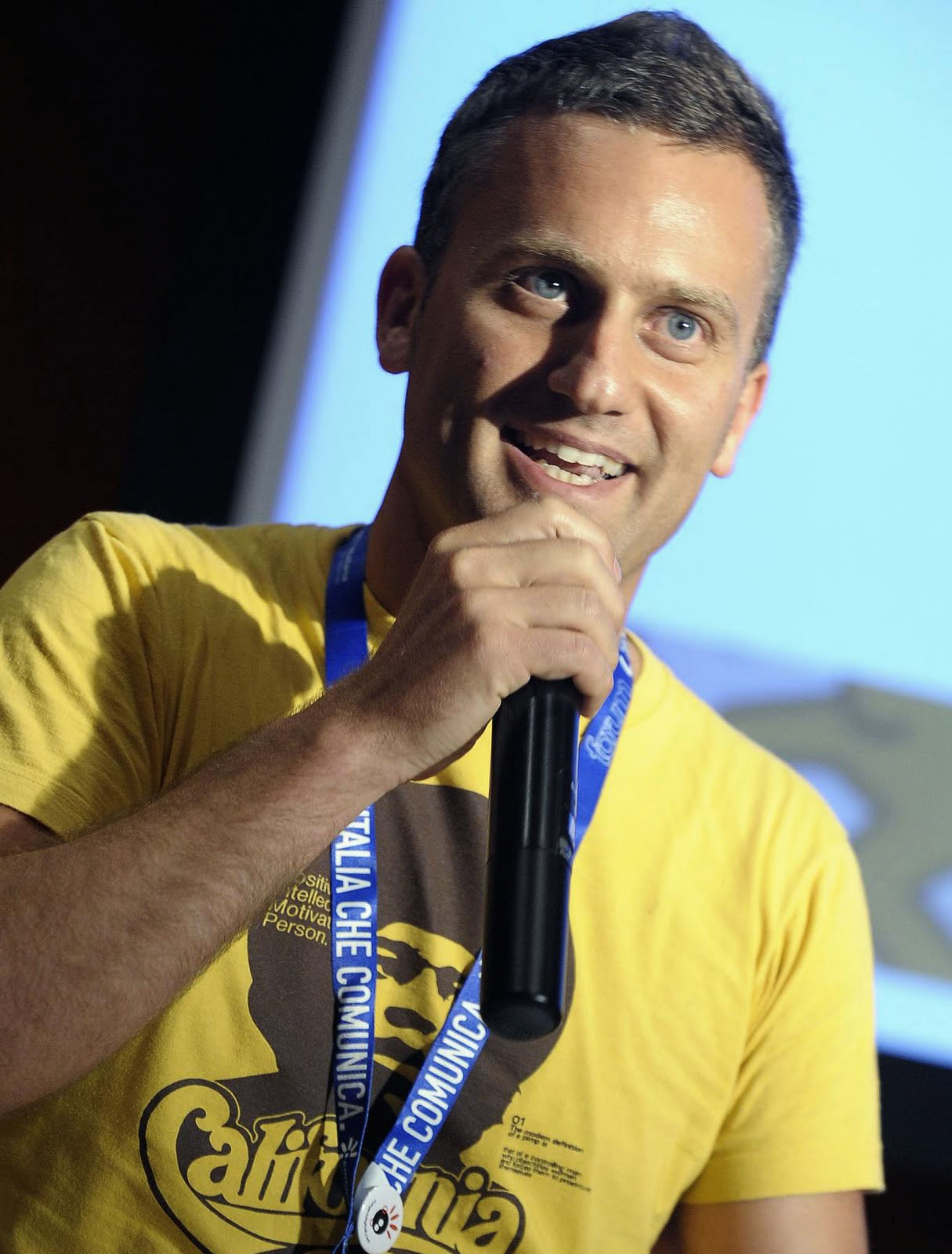
Photo credit: Stefano Passiglia


Intervistato.com | Fabio Lalli

A few days ago we had the pleasure of interviewing Fabio Lalli, founder of the Indigeni Digitali network and compulsive startupper.

The Indigeni Digitali network was born one and a half years ago from an idea that Fabio has often brought in the companies he has worked in: periodical informal drinks, a chance to do knowledge sharing among people working in different divisions inside the same company.
Afterwards the drink soiree was extended to the web, and it has become "Indigeni Digitali", growing and spreading rapidly in Rome and in the rest of Italy.
Each of the feathers in the Indigeni Digitali logo has a meaning, they represent the values of the  Indigeni and they basically are a synthesis of Pekka Himanem's Hacker Ethic[video]

Inside the network there aren't just programers and technicians, but also people who work in communication, managers, people who have already done business: these hybrid competences have lead to new projects, startups and even new job opportunities.
The future goals are on the one side make the network bigger, and it has already started to attract the interest of some ivnestors, on the other side maintaining the aspect that Fabio thinks is the most important: the selfless and useful approach. It's a network a people who help each other without brand interests or influences. Sponsors actively participate and make the network grow, but they don't modify the values and the model of the network itself. [video]

Fabio has stressed the importance of the collaboration with universities: Indigeni Digitali can represent a great opportunity for transferring experience from managers and entrepreneurs to people who are just now finishing college, and make new projects to light. [video]

Fabio has also talked about Followgram, an app born from the collaboration with Lorenzo Sfienti which allows users to extend Instagram's basic functions. The app has become extremely popular a very short time and it has been reviewed by CNN and The Next Web, and is also currently used by important brands such as AirFrance, British Airways, Audi and Converse.
Followgram's numbers are very promising: in 2 months 8600 have been generated (update: 16.600) vanity URLs, and the app counts 150 - 160 subscriptions, 17.000 unique users and 50.000 visited pages a day.
The app's success has brought its founders to think about a pro model that could be monetized. [video]

As for the economical aspect of startups, Fabio thinks that most projects should be self-sustainable and adopt a model that allows them to go online in a structured fashion, without needing money before they even start.
This is a good exercise for understanding in what way costs can be optimized, and not be obliged to grow in a constant tie between costs and revenues. [video]

We also talked with Fabio about enterprise 2.0, systems that are more evolved than classic Intranets: in his opinion the biggest prejudice companies have towards these kinds of approaches is the fear of losing control.
His experience inside companies that have adopted these systems is veery positive. Users were very responsibilized when they were bringing their contribution inside the company platform, and the advantages were obvious: firstly of all the availability of information, secondly the engagement that brings to reinforcing the sense of belonging to the company and increasing the closeness between employer and employee. [video]

We continued talking about geolocalization, crowdsourcing, the advantages and disadvantages of closing social networks inside companies and much more.

I invite everyone to view the full interview, much richer in insight and details than my brief synthesis.

Enjoy!

Maria Petrescu

venerdì 16 settembre 2011

Prossimamente: Fabio Lalli @fabiolalli


Fra poche ore avremo il piacere di intervistare Fabio Lalli, esperto di web marketing, social media e sistemi di comunicazione, nonché ideatore e fondatore del network di Indigeni Digitali.

Nato a Roma nel 1977, si è laureato in Comunicazione e Marketing all'Università degli Studi di Modena e Reggio Emilia.

Da oltre 10 anni si occupa di ICT. Ha lavorato per diverse aziende dalla consulenza, alla sicurezza ai system integrator e spaziando su progetti eterogenei: ecommerce, erp, crm, business intelligence, info security management e social media.
Ha acquisito una buona esperienza nell’analisi, progettazione ed ottimizzazione di processi, sistemi, architetture ed applicativi web e mobile. E' appassionato di comunicazione e marketing. Nel tempo libero blogga, twitta, comunica, telefona, programma, naviga, cerca, pensa e innoveggia. Ovviamente fa tutto contemporaneamente. Qualcuno lo definisce startupparo compulsivo.

E' il fondatore del network Indigeni Digitali, un'iniziativa che ha l’obiettivo di generare un punto di incontro e di confronto tra professionisti e tecnici che vogliono interagire collaborare e creare opportunità, sia online che offline.

"L’indigeno digitale è colui che vive il digitale in tutti i suoi aspetti: crea le nuove applicazioni, testa e approfondisce le nuove tecnologie, ricerca continuamente nuove soluzioni tecniche, partecipa attivamente alla conversazione in Rete, sperimenta ed applica nuovi strumenti, aiuta chi manifesta interesse per la tecnologia, mette a disposizione degli altri indigeni il proprio know how, le proprie capacità ed il proprio network."

Insieme a Lorenzo Sfienti ha recentemente lanciato Followgram, una web app sviluppata per estendere le funzioni base di Instagram, già utilizzata da milioni di utenti. Followgram crea un follow button da integrare in siti web e blog e fornisce agli utenti un vanity URL, una galleria di foto e la lista di amici, follower e following.

Fabio è anche l'ideatore di YepLike, Risquare, Baby 2.0 ed Iquii.

Avremo modo di parlare di cultura digitale, startup, il network degli Indigeni, giusto per citare alcuni argomenti.

Naturalmente, se volete proporre una domanda, compilate semplicemente il form qui sotto!

Maria Petrescu


Coming up soon: Fabio Lalli

In just a few hours we'll have the pleasure of interviewing Fabio Lalli, web marketing, social media and communication systems expert, as well as founder and creator of the Indigeni Digitali network.

Born in Rome in 1977, he graduated in Communication and Marketing at the 'Università degli Studi di Modena e Reggio Emilia.

He has been working with ICT for more than 10 years. He has worked for several companies as a consultant, from security to system integrator in several fields: ecommerce, erp, crm, business intelligence, info security management and social media.
He has gained a good experience in analysis, design and optimization of processes, systems, architectures and web/mobile applications. He is passionate about communication and marketing. In his spare time he blogs, tweets, communicates, phones, programs, navigates, searches, thinks and innovates. Obviously all at the same time. Someone has defined him a compulsive startupper.

He is the founder of the Indigeni Digitali network, an initiative that has the goal of generating a point of  encounter and confrontation between pros and technicians that want to interact, collaborate and create opportunities, both online and offline.

"The digital based person is the one that lives digital in every aspect: he creates new applications, tests and masters new technologies, searches for new technical solutions, participates actively in the online conversation, experiments and applies new tools, helps whoever shows interest for technology and shares his know how, capacities and network with other digital based people".

Together with Lorenzo Sfienti he has recently launched Followgram, a web app developed as a way to extend those Instagram's basic functions so appealing to millions of users already.
Followgram creates an Instagram's follow button to be embedded on websites, blogs and so on and provides its users with a vanity URL, his/her photo gallery, friends, followers & following lists.

Fabio is also the founder of YepLike, Risquare, Baby 2.0 and Iquii.

We'll have the chance to talk about digital culture, startups, the Indigeni Digitali network, just to name a few topics.

Of course, if  you want to propose a question, simply fill in the form above!

Maria Petrescu

▼ Leggi i migliori della settimana

2